
PRISM India: Where CSR Conversations Create Real Change
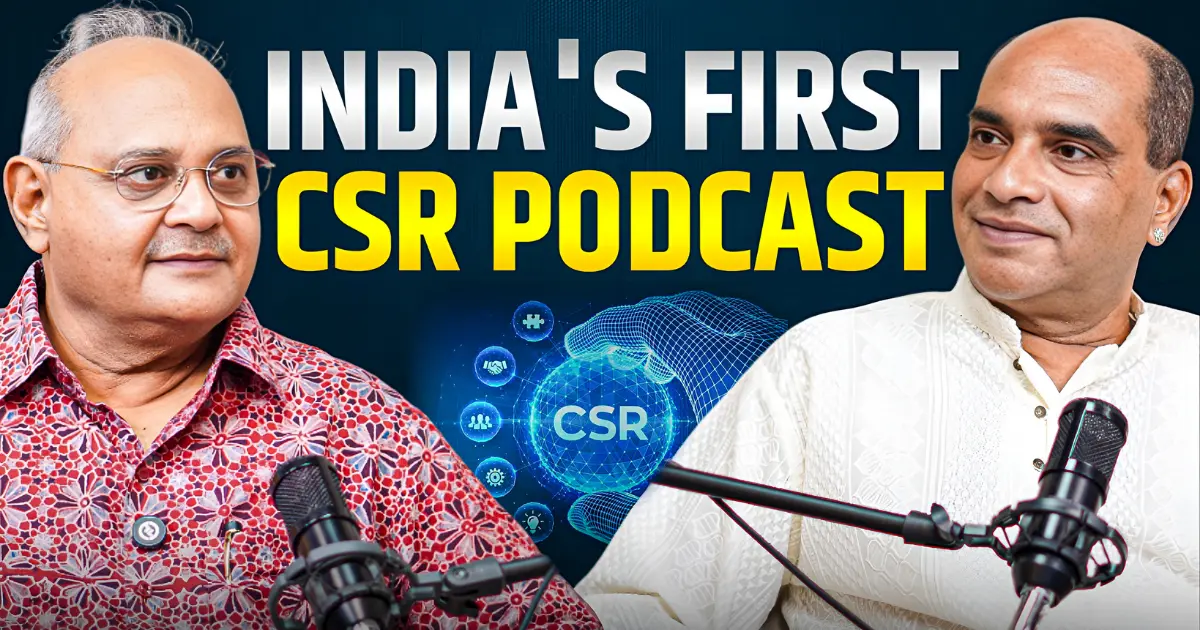
Introduction – CSR podcast India
India’s CSR ecosystem is vast, diverse, and sometimes frustrating in its fragmentation. Thousands of companies are spending billions of rupees on projects across hundreds of sectors and geographies, yet the practitioners — the CSR heads, the NGO implementers, the government officials who shape policy — often operate in silos that limit learning and reduce collective impact.
Into this landscape, PRISM India has carved a distinctive and necessary role. Among its many functions, PRISM India stands out as the country’s most enduring CSR podcast India platform — a space where the conversations that shape India’s social investment agenda happen out loud, in public, and with rigour.
PRISM — the Public-Private-Civil Society Responsibility Interface for Sustainable and Meaningful engagement — was founded in 2013 by Samabhavana, making it India’s first formal dialogue platform of its kind.
More than a decade later, it remains the only platform that systematically brings together corporate CSR leadership, government ministries, PSU CSR teams, and civil society organisations in structured, on-record conversation. That is not a small distinction. It is the foundation of PRISM’s value.
What PRISM India Actually Is
Understanding PRISM India requires understanding the problem it was designed to solve. Before PRISM, there was no neutral, sustained forum where a Ministry of Corporate Affairs official, a CSR head from a large manufacturing company, and a field-level NGO implementer could sit together and examine why a given CSR intervention was or was not working.
There were conferences, yes — but conferences are episodic, often performative, and rarely produce the kind of sustained relationship that generates real change.
PRISM is different in design and in practice. It is a year-round dialogue platform that operates through structured roundtables, policy consultations, and — significantly — a podcast format that extends these conversations to a much wider audience.
The podcast component captures candid, substantive discussions between practitioners, policymakers, and civil society leaders, and makes them available to anyone working in or interested in India’s CSR and social impact space.
Partners who have engaged with PRISM include some of India’s most prominent PSUs and corporates — GAIL, BSES, IRCON, and Suzuki among them. These are not sponsorships in the conventional sense; they are substantive engagements where these organisations bring their CSR challenges and learnings to the table and contribute to a shared body of knowledge about what works.
Why a CSR Podcast India Matters Now More Than Ever
India’s mandatory CSR regime, established under Section 135 of the Companies Act 2013, has created a large and growing ecosystem of corporate spending. Total CSR expenditure crossed ₹34,900 crore in FY 2023–24, with 61% of reporting companies exceeding their mandated 2% spend.
The number of companies filing CSR reports is at a historic high. BRSR (Business Responsibility and Sustainability Reporting) is now mandatory for the top 1,000 listed companies, requiring detailed disclosure of ESG and social impact metrics.
Yet quantity of spending does not automatically translate to quality of impact. India’s CSR ecosystem faces well-documented challenges: duplication of effort, poor outcomes measurement, short-term project cycles that cannot produce lasting change, and a persistent disconnect between what companies want to fund and what communities actually need. These are not new problems, but they are urgent ones as the scale of CSR spending grows.
A CSR podcast India that brings serious practitioners together to examine these challenges serves a function that no report, conference, or annual CSR award can replicate. It creates a public record of thinking — of what has been tried, what has worked, why something failed, what the next frontier looks like.
For a CSR head joining a new organisation, a PRISM episode is a faster and more honest education than any consultant’s deck. For a government official designing a new Schedule VII category, hearing directly from the people implementing CSR at scale is irreplaceable input.
The Voices on PRISM
PRISM’s credibility comes from the quality and diversity of the voices it convenes. CSR heads from large Indian corporates and PSUs bring the perspective of organisations navigating mandatory compliance, stakeholder expectations, and the practical challenge of implementing social programmes at scale.
Government officials bring the policy lens — the regulatory context, the national priorities, the infrastructure of schemes and programmes that corporate CSR can align with or fill gaps around.
Civil society voices are PRISM’s most distinctive contribution. NGOs and social enterprises often hold the most granular, honest knowledge of what happens on the ground when a CSR project meets a community. They know which assumptions funders make that do not hold, which metrics are easy to measure but do not capture what matters, and which interventions have a durable impact versus a brief one.
Giving these voices equal standing in a multi-stakeholder dialogue is what makes PRISM unusual — and unusually valuable.
The podcast format amplifies this. A 45-minute conversation between a CSR director, a district collector, and a field programme manager can convey more nuance, more authentic learning, and more actionable insight than any formal publication.
The CSR podcast India format reaches audiences that formal reports never do — mid-level CSR managers, students of social work and public policy, journalists covering development, and the general public with an interest in how India’s corporate sector engages with social challenges.
PRISM and Samabhavana’s Broader Mission
PRISM is not a standalone initiative. It is the expression of Samabhavana’s belief that dialogue, knowledge exchange, and shared accountability are preconditions for effective CSR implementation.
Samabhavana has been implementing CSR programmes for 25 years — in education, health, skill development, women empowerment, and diversity and inclusion. That ground-level experience informs every PRISM conversation.
The organisation brings to PRISM what very few conveners can: the credibility of being an implementer, not just a commentator.
When Samabhavana facilitates a dialogue about what works in community health CSR, it is not drawing on secondary research alone — it is drawing on years of programme delivery across Maharashtra and beyond. This combination of implementation depth and convening breadth is what makes PRISM’s conversations different.
For corporate CSR teams looking to align their programmes with national priorities, understand the regulatory landscape, and learn from peers who have navigated similar challenges, PRISM is an invaluable resource.
Explore the full PRISM platform at PRISM INDIA.
The Topics PRISM Covers
PRISM’s dialogue agenda tracks India’s most pressing social and policy challenges. Recent conversations have covered the integration of CSR with the government’s flagship schemes — PM SHRI in education, Ayushman Bharat in health, PMKVY in skill development.
The platform has addressed the challenge of measuring social impact rigorously in the context of mandatory BRSR disclosures, and has hosted discussions on the role of corporate CSR in supporting India’s mental health infrastructure — a Schedule VII-eligible area that remains severely underfunded.
PRISM has also been a forum for honest conversation about what CSR gets wrong. The tendency to fund what is visible rather than what is impactful. The preference for urban over rural implementation. The challenge of CSR committees approving projects that are strategically misaligned with national need. These are uncomfortable topics, but they are the conversations that improve the quality of CSR practice over time.
For organisations working in specific sectors, Samabhavana’s programme pages provide further context on the areas where CSR investment can make the greatest difference: education, health, skill development, and women empowerment.
The Future of PRISM: Scaling Dialogue for Greater Impact
As India’s CSR ecosystem matures, PRISM’s role becomes more important, not less. The shift from compliance to strategic CSR — driven by BRSR requirements, ESG investor scrutiny, and growing community expectations — creates a greater need for the kind of candid, evidence-based dialogue that PRISM facilitates.
Companies navigating this shift have a complex set of questions to answer:
- Which implementing partners are genuinely capable?
- Which Schedule VII categories offer the greatest impact leverage in specific geographies?
- How do national policy shifts — in education, in health insurance, in skills infrastructure — change the optimal design of CSR programmes?
PRISM is expanding its reach through the podcast format, making these conversations accessible to a much wider audience than can attend physical roundtables.
CSR professionals in Tier 2 and Tier 3 cities, in PSUs in remote operational locations, in civil society organisations working in areas with limited connectivity to the Mumbai and Delhi CSR networks — all of these audiences benefit from conversations that were previously confined to conference rooms.
The democratisation of CSR knowledge is one of PRISM’s most significant contributions, and it is one that grows as the podcast audience grows.
Samabhavana is also exploring how PRISM can serve as a platform for joint learning across the corporate-government interface. As BRSR reporting matures and the Ministry of Corporate Affairs continues to refine the CSR regulatory framework.
PRISM’s ability to convene candid, on-record discussions between regulators and the regulated creates genuine public value — informing policy with ground-level evidence and giving companies a channel to raise implementation challenges that the regulatory framework may not yet have addressed.
FAQ – CSR podcast India
Q1: What is the PRISM CSR podcast India?
PRISM India is India’s first public-private-civil society CSR dialogue platform, founded by Samabhavana in 2013. Its podcast component captures substantive conversations between corporate CSR leaders, government officials, and civil society practitioners — making practitioner knowledge accessible to India’s broader CSR community.
Q2: Who participates in PRISM India dialogues?
PRISM convenes corporate CSR heads, PSU leaders, government ministry officials, district administrators, and NGO practitioners. Key corporate and PSU partners have included GAIL, BSES, IRCON, and Suzuki, among others.
Q3: How is PRISM different from a typical CSR conference?
PRISM operates year-round through structured roundtables, policy consultations, and podcast recordings. Unlike episodic conferences, it builds sustained relationships and creates a public record of practitioner knowledge that can be referenced and built upon over time.
Q4: What topics does the PRISM podcast cover?
PRISM covers the full range of India’s CSR landscape — education, health, skill development, women empowerment, mental health, rural development, and the regulatory framework of Schedule VII, mandatory reporting, and BRSR. It also addresses the harder questions about measurement, impact, and the gap between CSR intent and implementation outcomes.
Q5: Why was PRISM founded in 2013?
PRISM was founded by Samabhavana in response to the fragmentation of India’s emerging CSR ecosystem. The Companies Act 2013 was establishing mandatory CSR for the first time, and Samabhavana saw the need for a sustained, multi-stakeholder dialogue platform that could help translate regulatory obligation into genuine social impact.
Q6: How can an organisation join PRISM India?
Corporate CSR teams, PSUs, government bodies, and NGOs interested in participating in PRISM dialogues or the podcast can Get in touch through samabhavana.in/contact-us.html.
Samabhavana welcomes partners who want to contribute to and learn from India’s most substantive CSR dialogue platform.
CONCLUSION
India’s CSR ecosystem needs more than good intentions and adequate budgets. It needs knowledge, honest conversation, and the kind of mutual accountability that only sustained dialogue can build.
PRISM India has been providing exactly this since 2013 — and its podcast continues to be the most accessible expression of that mission.
Whether you are a CSR head trying to design a more impactful programme, a government official looking to understand how corporate investment aligns with national schemes, or a civil society practitioner wanting your field experience to shape the broader conversation, PRISM India has a place for you.
Connect with Samabhavana to explore how you can participate in PRISM — India’s defining CSR podcast India, where conversation becomes commitment, and commitment becomes change.